Source VVT Timing Oil Control Valve for Nissan Toyota Generator
Find 30 vvt timing oil control valve options from verified suppliers in China. Buyers can compare models like 24356-3E000 and 1628924280, check certifications such as ISO and TS16949, and review lead times ranging from 1 to 45 days for replacement or repair needs.
Key considerations
Products List








Comprehensive Sourcing Guide
Strategic Sourcing Guide for VVT Timing Oil Control Valves
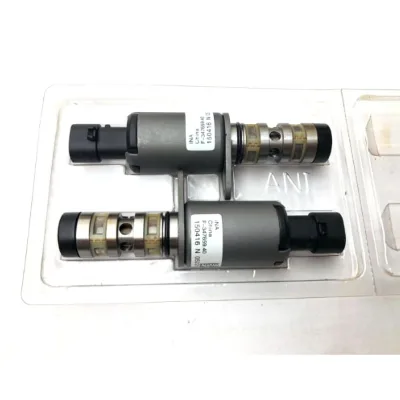
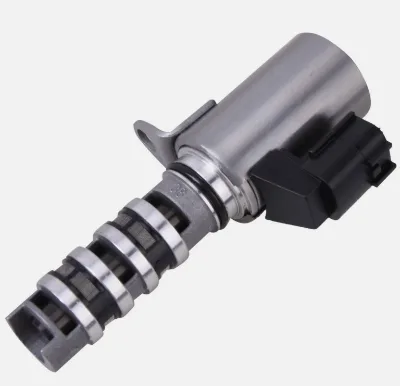
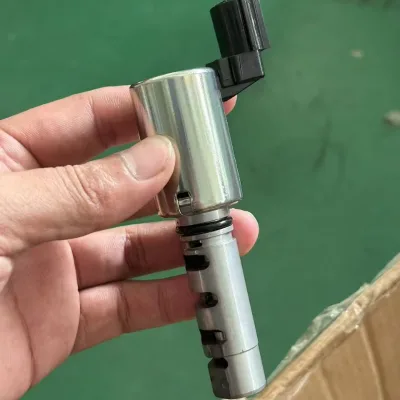
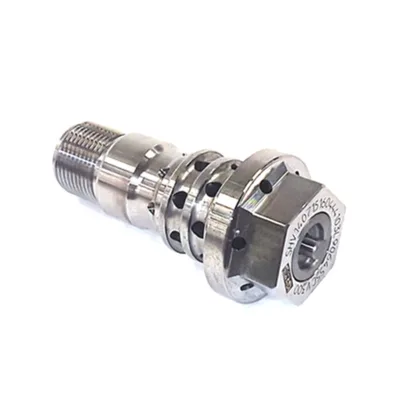
The Variable Valve Timing (VVT) system is a critical component in modern internal combustion engines, designed to optimize engine performance, fuel efficiency, and emissions control. At the heart of this system lies the VVT timing oil control valve, a precision solenoid that regulates oil flow to the camshaft phasers. For procurement professionals, sourcing these components requires a disciplined approach that balances technical compatibility, regulatory compliance, and supply chain reliability. The following guide outlines the essential factors for evaluating suppliers and products in this specialized category, grounded in observed market data and industry standards.
Technical Specifications and Component Compatibility
When sourcing a VVT timing oil control valve, the primary objective is ensuring exact mechanical and electrical compatibility with the target engine. The product attributes observed in the current market indicate that these components are frequently categorized as "Electric" actuators with a "Solenoid" type mechanism. The core function involves the regulation of hydraulic pressure, often utilizing "Oil" as the working media to actuate the camshaft timing gears.
A critical aspect of technical verification is the identification of the specific part number or OE (Original Equipment) number. The market data highlights several specific identifiers, such as 24356-3E000, 1628924280, LR024995, 24375-2G500, 24355-03011, 24355-2J000, and 15340-20011. Buyers must cross-reference these numbers against their vehicle's service manual or the existing component to ensure a direct replacement. The "OE No." field often lists multiple compatible codes, such as 1068298045, 0501213960, and 0501213959, suggesting that a single valve design may serve multiple vehicle platforms or revisions.
The physical construction of the valve is equally important. Observed specifications list "Steel" as the body material, which provides the necessary durability to withstand high engine temperatures and vibration. The texture of the component is also noted as "Steel," indicating a robust metallic finish. Furthermore, the "Standard" size and "Standard Component" classification suggest that while the valve is a generic type, the specific dimensions and mounting points must align with the engine block's design. For applications involving generators or other non-automotive engines, the "Application" field notes compatibility with "Generator" systems, though the primary focus remains on automotive replacements for makes like "Nissan" and "Toyota."
Regulatory Compliance and Certification Verification
In the global automotive supply chain, compliance with international standards is non-negotiable. Buyers must verify that suppliers possess valid certifications that attest to the quality and safety of their manufacturing processes. The observed market data reveals a diverse range of certifications, including "CCC" (China Compulsory Certification), "COP", "ISOCE", "E-Mark", "RoHS", "TSFuel:Gasoline", "CE", "ISO", and "TS16949".
The presence of "TS16949" is particularly significant, as this is the specific quality management standard for the automotive industry, replacing the older ISO/TS 16949. It ensures that the supplier has implemented rigorous process controls, defect prevention, and continuous improvement methodologies. Similarly, "E-Mark" certification indicates that the component meets European Union safety and environmental requirements, which is essential for vehicles exported to or operating within Europe. "RoHS" compliance confirms that the product is free from specific hazardous substances, aligning with environmental regulations in many jurisdictions.
Buyers should not assume that every listed product holds every certification. The data shows variation; for instance, one entry lists "TSFuel:Gasoline" while another lists "TS16949". It is the buyer's responsibility to request current certification documents for the specific batch or model being purchased. The "Quality" attribute often mentions "100% Professional Test" or "High Quality," but these are observations of the supplier's claims rather than verified test results. Therefore, procurement teams must demand third-party test reports or certificates of conformity that explicitly reference the relevant standards for the specific valve model.
Cost Drivers and Pricing Structures
Understanding the cost structure of VVT oil control valves is essential for budgeting and negotiation. The observed price range in the market is extremely broad, spanning from $0.99 to $99,999. This wide variance is likely due to differences in product volume, packaging, shipping terms, and the inclusion of ancillary services rather than the unit cost of the valve itself. A single solenoid valve typically does not command a price near the upper limit of this range unless it is part of a bulk industrial order or includes extensive logistics services.
The "Price" attribute specifies "Fob Guangzhou Port," indicating that the quoted price is Free on Board at the Guangzhou port in China. This means the buyer is responsible for freight, insurance, and import duties from that point onward. Buyers must clarify whether the quoted price includes packaging, testing, or documentation fees. Additionally, the "Minimum Order Quantity" (MOQ) varies significantly, with observed ranges from 1 to 100 units. Some suppliers list an MOQ of "5 Pieces," while others require "100PCS." This disparity affects the total cost of ownership, especially for small repair shops or low-volume distributors.
Other cost drivers include the "prod_packing" method. Options range from "White Bag, White Box, Carton" to "as Customer's Request" or "Package of Box." Custom packaging requests often incur additional fees. The "Delivery" terms also impact cost; some suppliers offer "After Paid 2days" delivery, while others list a "Deliver Time" of "30-45days." Faster lead times, such as the "1-7 Days" or "Fast Shipments" noted in the data, may come at a premium. Buyers should calculate the total landed cost, including the unit price, MOQ constraints, packaging fees, and shipping logistics, to make an informed financial decision.
Typical Applications and Vehicle Integration
The VVT timing oil control valve is primarily designed for the replacement and repair of automotive engines. The "Purpose" attribute explicitly states "for Replace/Repair," confirming its role as a maintenance component rather than a primary design feature for new manufacturing lines. The data indicates specific compatibility with major manufacturers, notably "Nissan" and "Toyota." These brands utilize VVT systems extensively in their gasoline-powered engines to enhance fuel economy and reduce emissions.
Beyond standard automotive applications, the "Application" field notes compatibility with "Generator" systems. This suggests that the technology is adaptable to stationary power generation equipment, where consistent engine timing is crucial for stable power output. The "Carburettor Type" is listed as "Downdraft," which, while less common in modern fuel-injected engines, indicates the valve's potential integration into older or specific engine architectures that rely on carburetion.
The "prod_model" numbers serve as the primary link between the valve and the engine. For example, the model 24356-3E000 or 15340-20011 corresponds to specific engine families. Buyers must ensure that the "Car Make" matches their inventory or customer base. A mismatch in the OE number or model code can lead to installation failures, engine damage, or voided warranties. The "Warranty" of "1 Year" is a standard offering for these components, providing a safety net for buyers against premature failure, provided the installation and operating conditions meet the manufacturer's specifications.
Supplier Evaluation and Quality Assurance
Selecting a reliable supplier is as critical as selecting the correct part. The "Location" of the suppliers is predominantly "Zhejiang, China" or generally "China," a region known for its robust manufacturing ecosystem. However, geographic origin alone does not guarantee quality. Buyers should evaluate suppliers based on their "Quality" assurance processes. The data mentions "100% Professional Test" and "High Quality" as attributes, but these must be substantiated by the supplier's quality control protocols.
The "Feature" set includes "Safe, Fixed, Stable, Durable, Quality Assurance," which are desirable traits for any automotive component. However, buyers should verify how these features are achieved. For instance, "Safe" implies electrical safety and pressure containment, while "Stable" refers to consistent performance under varying engine loads. The "Technics" attribute lists "Push," which may refer to the actuation method or assembly technique, though this term is somewhat generic and requires clarification from the supplier.
Suppliers should also demonstrate transparency in their "prod_packing" and "prod_origin" details. Consistency in packaging, such as using "Carton" or "White Box," helps prevent damage during transit. The "Language" attribute noting "Multiple Language" support can be beneficial for international buyers, ensuring clear communication regarding technical specifications and order status. Ultimately, the supplier's ability to meet the "Lead Time" of "1-7 Days" or "30-45days" depends on their inventory management and production capacity. Buyers should prioritize suppliers who can provide verifiable evidence of their quality control measures and consistent delivery performance.
Long-Term Procurement and Inventory Management
Sourcing VVT timing oil control valves is not a one-time transaction but part of a long-term supply chain strategy. The "in Stock" status and "Fast Shipments" capabilities are vital for maintaining inventory levels and minimizing downtime for repair shops or assembly lines. However, the "Lead Time" variability, ranging from "1-7 Days" to "30-45days," necessitates careful inventory planning. Buyers should maintain a buffer stock to account for potential delays, especially when dealing with suppliers who have longer lead times.
The "Customization" availability is a significant factor for long-term procurement. Some suppliers offer "Customization" and "as Customer's Request" packaging, which can be advantageous for branding or specific logistical needs. However, custom orders often come with higher MOQs and longer lead times. Buyers must weigh the benefits of customization against the constraints of inventory turnover.
Furthermore, the "Warranty" of "1 Year" provides a baseline for product reliability. Buyers should establish clear protocols for handling warranty claims, including the process for returning defective units and obtaining replacements. The "Standard Component" classification suggests that these parts are interchangeable within certain parameters, but buyers should remain vigilant for updates in OE numbers or model revisions that might affect compatibility.
In conclusion, sourcing VVT timing oil control valves requires a meticulous approach that integrates technical verification, compliance checks, cost analysis, and supplier evaluation. By focusing on the specific OE numbers, certifications like TS16949, and lead time reliability, buyers can secure high-quality components that ensure engine performance and operational efficiency. The observed market data provides a foundation for these decisions, but continuous due diligence and clear communication with suppliers remain the keys to successful procurement in this dynamic field.
FAQs
What certifications are required for vvt timing oil control valve suppliers?
Suppliers typically provide TS16949, E-Mark, RoHS, and CE certifications for these valves. Buyers must verify specific batch documents as not every listed product holds every certification, ensuring compliance with automotive and environmental standards before purchase.
How long is the lead time for vvt timing oil control valve delivery?
Lead times vary significantly from 1-7 days to 30-45 days depending on the supplier. Some vendors offer fast shipments after payment, while others require longer production windows, so buyers should confirm delivery schedules before placing orders.
Which vehicle makes are compatible with vvt timing oil control valves?
These valves are primarily designed for Nissan and Toyota gasoline engines. They also serve generator applications, but exact compatibility depends on matching specific OE numbers like 24356-3E000 or 15340-20011 to the engine model.
Can I request custom packaging for vvt timing oil control valve orders?
Yes, customization is available for packaging such as white bags, boxes, or customer-specific requests. However, custom packaging may affect the minimum order quantity and lead time, requiring negotiation with the supplier regarding specific logistical needs.
What is the minimum order quantity for vvt timing oil control valves?
Minimum order quantities range from 1 to 100 pieces depending on the supplier. Some vendors require 5 pieces while others mandate 100 pieces, so buyers must check specific MOQ constraints to determine total procurement costs.
Where are vvt timing oil control valve manufacturers located?
Most manufacturers are located in Zhejiang, China, or generally within China. Buyers should verify the specific origin for each product to ensure it aligns with their logistics requirements and to understand the shipping terms like FOB Guangzhou Port.